About the Project
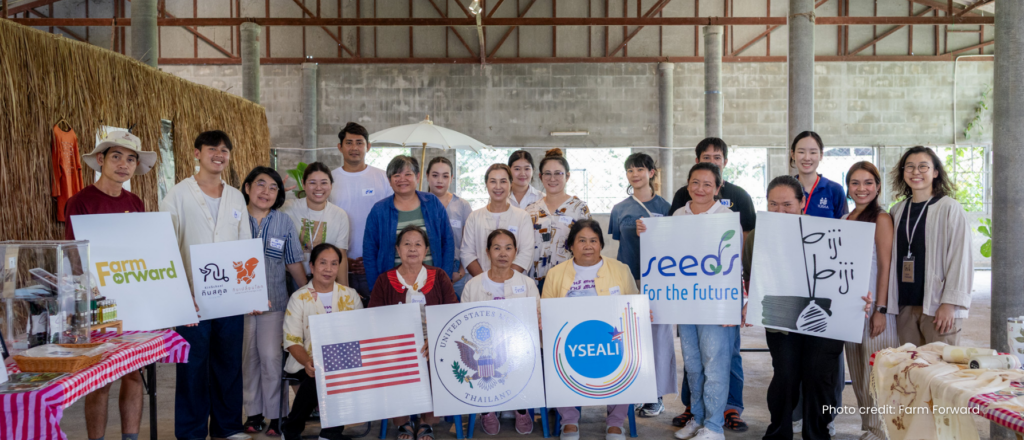
Farm Forward establishes a coordination and visibility system for organic farming in Chiang Mai and Lamphun, Thailand. We designed the initiative to address fragmented networks, limited market access, and low discoverability of organic producers. The system combines cross-provincial exchanges, documentation of local practices, and a digital mapping tool that connects producers, consumers, and agri-food stakeholders.
Why do you care about this specific topic/issue?
Organic farmers in northern Thailand often operate in isolation, with limited mechanisms to share practices, access markets, or present their offerings to consumers beyond their immediate area. These structural gaps reduce the ability to scale successful organic farming practices and weaken the regional agri-food system. We focus on this issue because coordination and visibility are operational requirements for resilient local food systems.
Why did you decide to start this project?
Observations following severe flooding in Chiang Mai revealed that despite how interconnected environmental events, production practices, and consumption patterns are , policies rarely addressed them in an integrated way. This highlighted the absence of practical platforms that connect producers, consumers, and local stakeholders through shared information and direct interaction. Farm Forward began as a pilot to test whether coordinated exchanges and visibility tools could close this gap.
What are your goals for this project?
We will strengthen cross-provincial coordination among organic producers, document and share local farming practices, and improve market visibility through a consumer-facing digital platform. Another goal is to test whether structured exchanges and mapping tools can support stronger linkages between production, distribution, and consumption.
How will YSEALI Seeds help you achieve your goals?
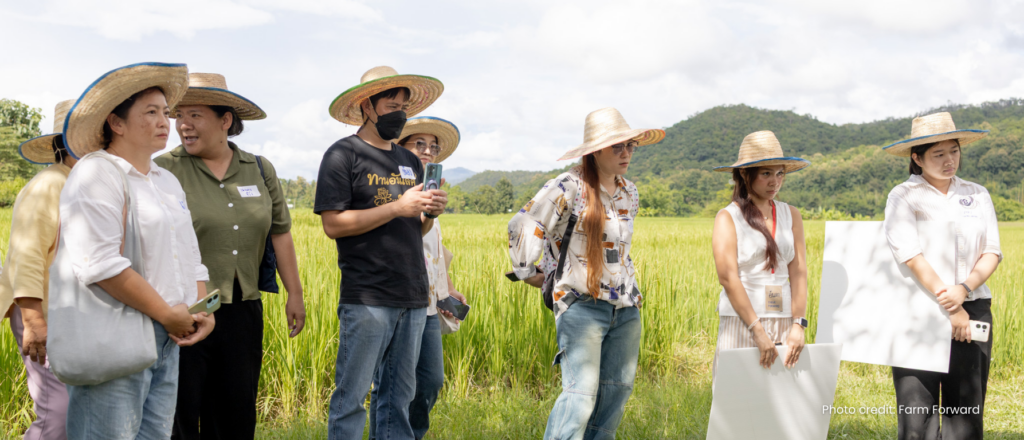
YSEALI Seeds for the Future provided funding that enabled field travel, exchange activities across Chiang Mai and Lamphun, and coordination with farmers, local partners, and municipalities. Institutional backing from YSEALI Seeds supported trust building with local stakeholders and allowed us to test activities before formalizing tools and outputs.
What have you accomplished and implemented so far?
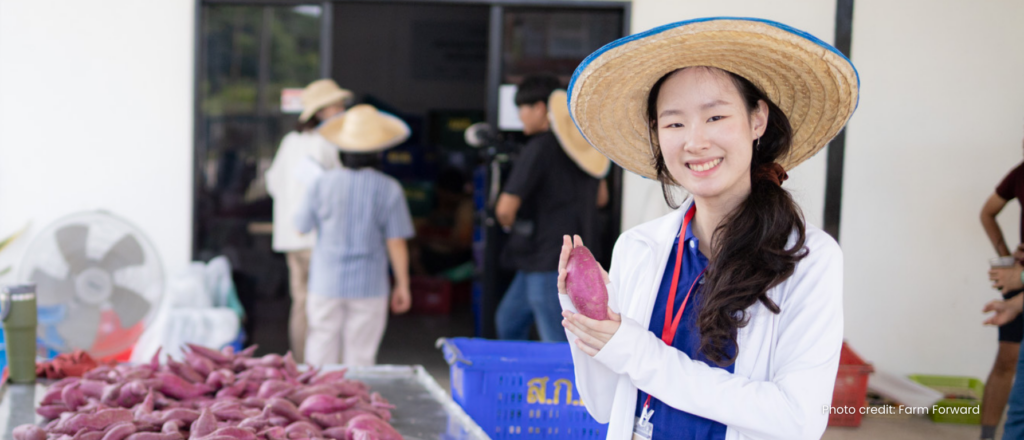
We conducted 10 cross-provincial farm and community immersion exchanges involving over 100 farmers and local participants. We produced 10 kinds of reference booklets documenting regional organic farming methods and coordination insights.
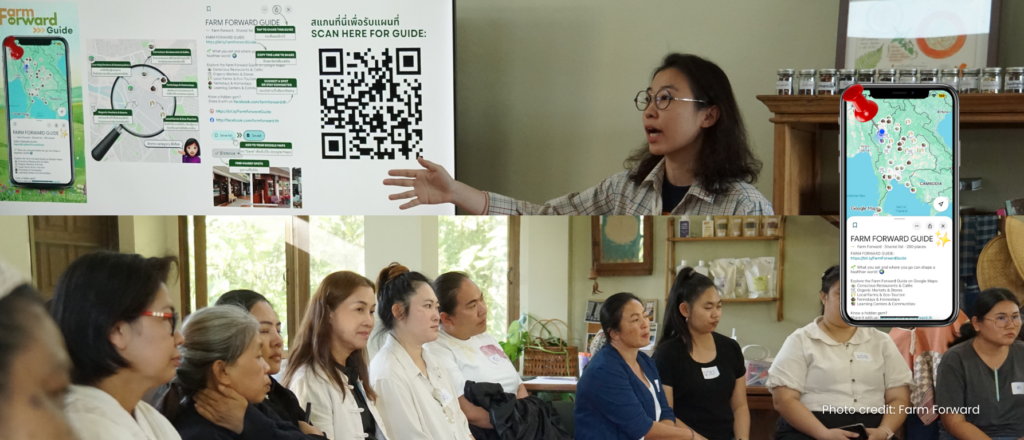
We launched the FARM FORWARD GUIDE, a Google Maps-based platform that verified and geolocated over 300 organic enterprises. Over 200 consumers from 10 countries accessed the platform in more than four months. In parallel, online content related to food and agriculture reached over 50,000 viewers.
What are the most significant lessons learned you’ve experienced so far?
Early testing showed that small-scale pilots generate clearer feedback than extended planning phases. Field-based exchanges revealed practical constraints and coordination needs that were not apparent from desk research alone. Visibility tools are more effective when paired with verification and local knowledge rather than open-source listings alone.
What are the success stories you can share with others?
During follow-up visits to Mae Tha, participating farmers reported adjustments to their operations after the pilot, including hosting interns to support communication and planning peer-led training activities. These outcomes reflected practical reuse of the exchange format rather than adoption of a fixed model.