About the Project
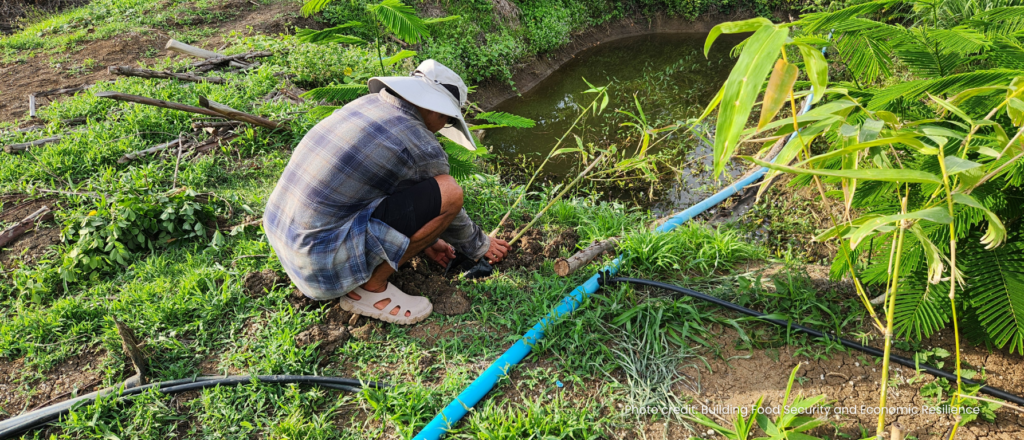
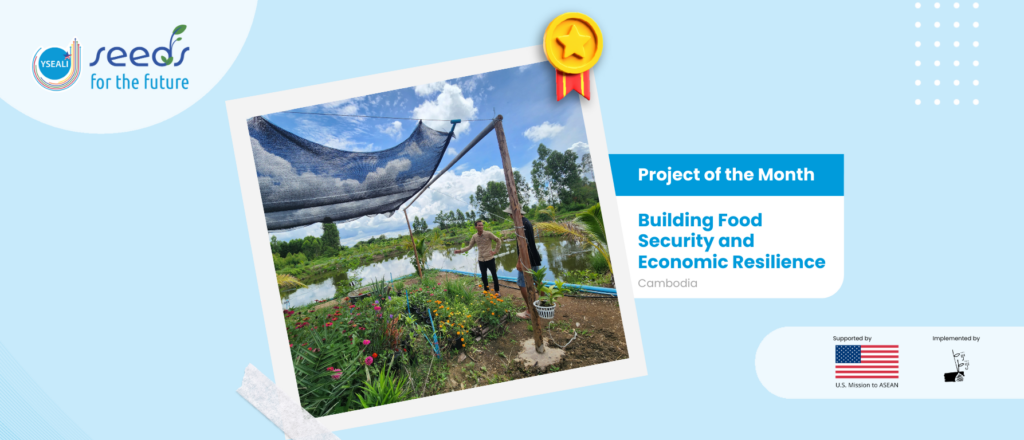
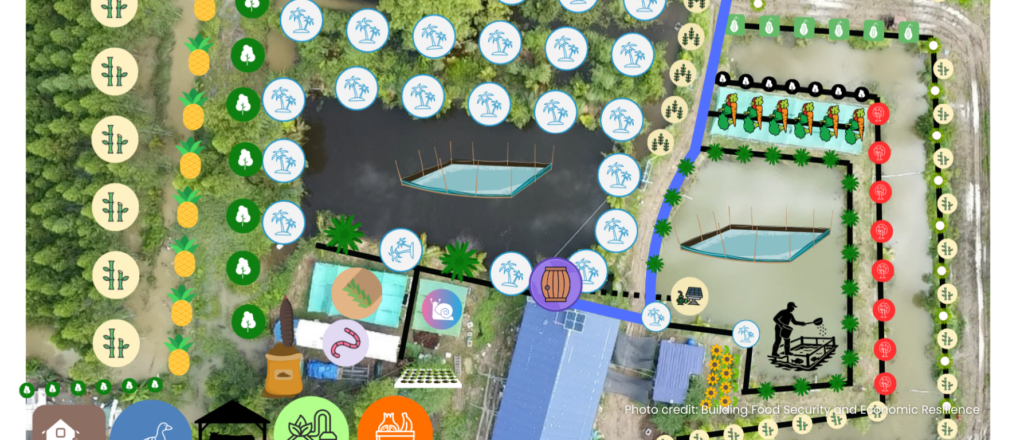
Building Food Security and Economic Resilience With Responsible Farming and Tech establishes a model farming system in Poipet, Cambodia, that combines sound agricultural practices with simple digital tools. We designed the system to address the fragmented farm workflows, high input dependency, and limited planning visibility that many smaller households face. The approach demonstrates how composting, crop diversification, and incorporating small livestock can comprise a single, low-input production system that households can adopt in phases.
Why do you care about this specific topic/issue?
Smallholder farming systems often operate without clear links between soil management, crop planning, livestock use, and waste reuse. This lack of coordination increases costs, reduces yield stability, and weakens household food planning. We focus on this issue because many existing practices rely on inputs rather than workflows, creating long-term inefficiencies that are difficult to manage or scale.
Why did you decide to start this project?
Repeated observations in local farming areas showed that chemical dependency and monoculture practices created recurring production and financial risks. Crop failures and rising input costs highlighted the absence of practical alternatives that households could test without major investment. These conditions signalled the need for a working model that demonstrates integrated, lower-cost farming processes.
What are your goals for this project?
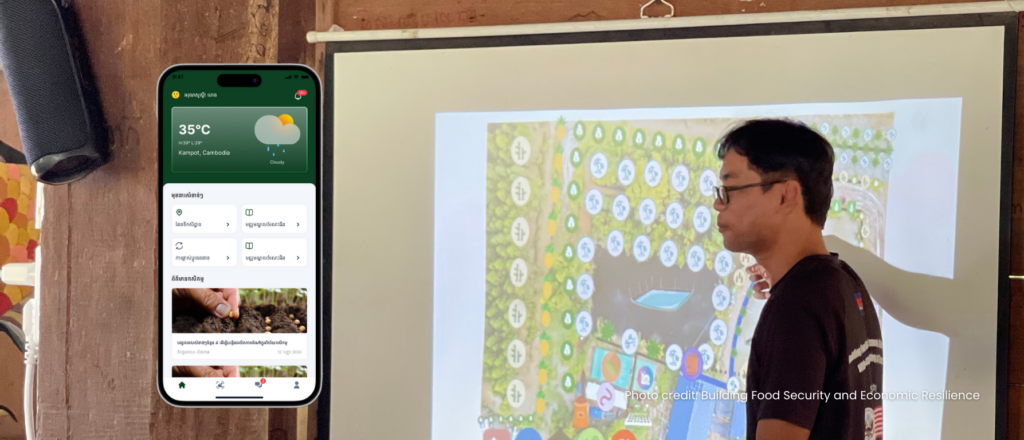
We will document a functioning model farm that shows how composting, crop diversification, incorporating small livestock, and closed-loop resource use can operate together. We will also translate this system into clear step-by-step workflows that farmers can adapt to varying land sizes and capacities. In parallel, we are developing a digital tool to support basic mapping, record keeping, and knowledge exchange to improve operational clarity.
How will YSEALI Seeds help you achieve your goals?
YSEALI Seeds for the Future provides funding for farm infrastructure, production units, and farmer workshops, enabling us to move from concept to field implementation. Program mentorship and structured check-ins support decision making and workflow refinement. Institutional backing from YSEALI Seeds also facilitates coordination with local NGOs, agricultural groups, and farmer networks for testing and exposure.
What have you accomplished and implemented so far?
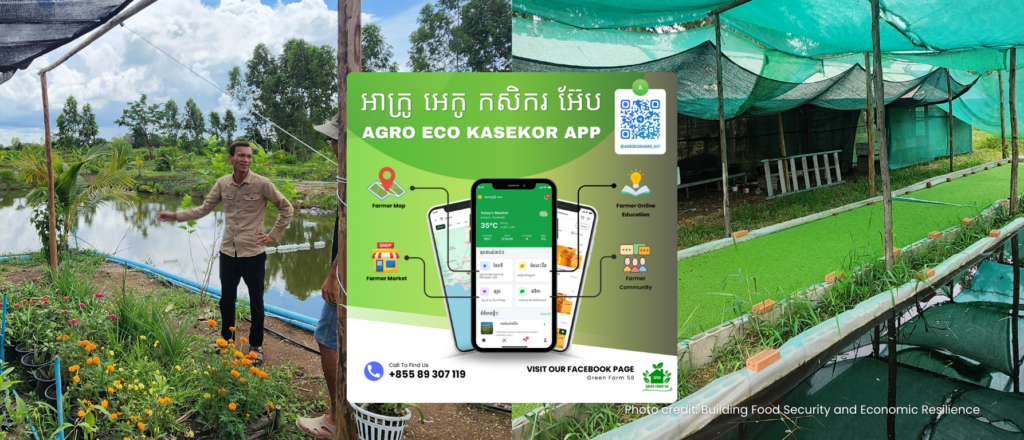
We completed four production shelters for ducks, chickens, and earthworms; cultivated Black Soldier Flies, planted more than 200 trees; and installed one activation-ready biogas unit. A structured feed and shelter system currently manages a dozen ducks and chickens.
We also developed four mobile application features covering farm mapping, market information, a knowledge hub, and a discussion space. In addition, we conducted a two-day workshop with 25 farmers covering composting, soil preparation, seedling management, non-synthetic pesticide production, and a walkthrough of the model farm system, including a live mobile app demonstration.
What are the most significant lessons learned you’ve experienced so far?
The implementation showed that preparation stages strongly influence outcomes. Soil conditioning and irrigation planning affect crop performance more than planting density alone. Some planting combinations and transplanted fruit trees required adjustment periods, while rapid livestock scaling introduced management strain. These findings reinforced the need for phased implementation, continuous observation, and workflow adjustments based on field results.
What are the success stories you can share with others?
During our workshop, farmers noted that seeing integrated systems in operation clarified how crops, livestock, and waste streams can function within a single cycle. Some participants identified specific components, such as compost reuse or small livestock integration, that they could apply immediately, while others preferred to observe longer-term results before adoption.