About the Project
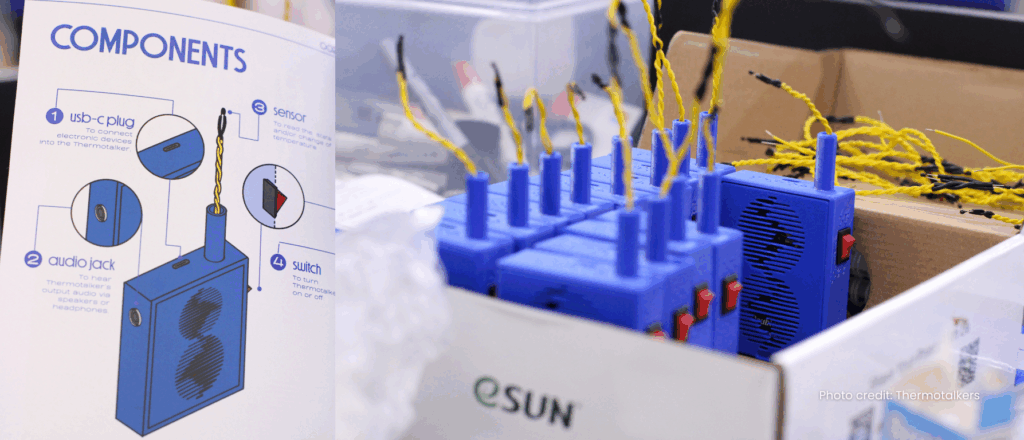
ThermoTalkers is a low-cost talking thermometer for blind and visually impaired students. Our device addresses the gap in accessible laboratory tools by converting temperature data into clear audio. This approach supports students in conducting experiments independently and provides teachers with a practical way to run safer, more accessible science sessions.
We developed ThermoTalkers to fill a workflow gap that affects STEM learning in many schools. Visual instruments dominate science instruction, and students who cannot rely on sight often struggle to join hands-on activities. Our solution introduces an option that fits existing classroom routines while improving access for learners who depend on non-visual feedback.
Why do you care about this specific topic/issue?
Most laboratory tools are designed for sighted users, resulting in inconsistent participation among blind and visually impaired (BVI) students. Teachers work with limited resources and often lack equipment that fits their needs, creating an operational gap in science education that affects safety, engagement, and skill development.
Schools need practical tools that match classroom workflows rather than specialized devices that are costly or difficult to obtain. ThermoTalkers responds to this gap by offering a straightforward solution that teachers can integrate into routine lessons.
Why did you decide to start this project?
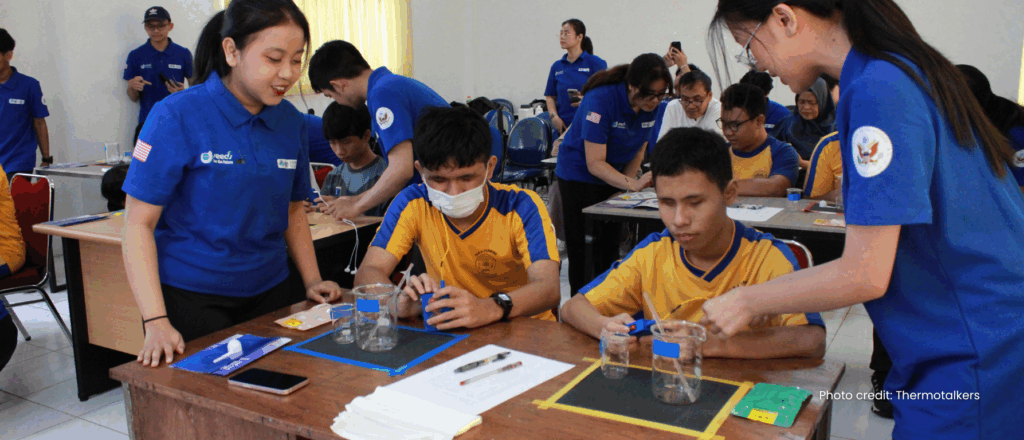
The idea began when we observed visually impaired students excluded from experiments due to safety concerns and reliance on visual readings. This pattern repeated across different schools and subjects. We recognized that a simple text-to-speech tool could remove much of that barrier and allow students to participate directly in experiments involving temperature changes.
Seeing this repeated inefficiency convinced us to provide a more scalable, low-cost solution, one that families, schools, and teachers could adopt without specialized training.
What are your goals for this project?
Our goal is to build a practical system that enables blind and visually impaired students to conduct laboratory experiments confidently, independently, and safely. We focus on standardizing classroom temperature measurement by providing a device that integrates with existing lesson plans. We also intend to support teachers with workshop materials and processes that make science activities more accessible.
How will YSEALI Seeds help you achieve your goals?
YSEALI Seeds for the Future funding supports the production of talking thermometers, device testing, and the delivery of workshops for students. The grant allows us to gather data from pilot schools, refine our prototyping workflow, and prepare materials that match BVI classroom needs. Mentorship and program check-ins help us improve decision making, while the program’s institutional backing strengthens collaboration with schools and national foundations.
What have you accomplished and implemented so far?
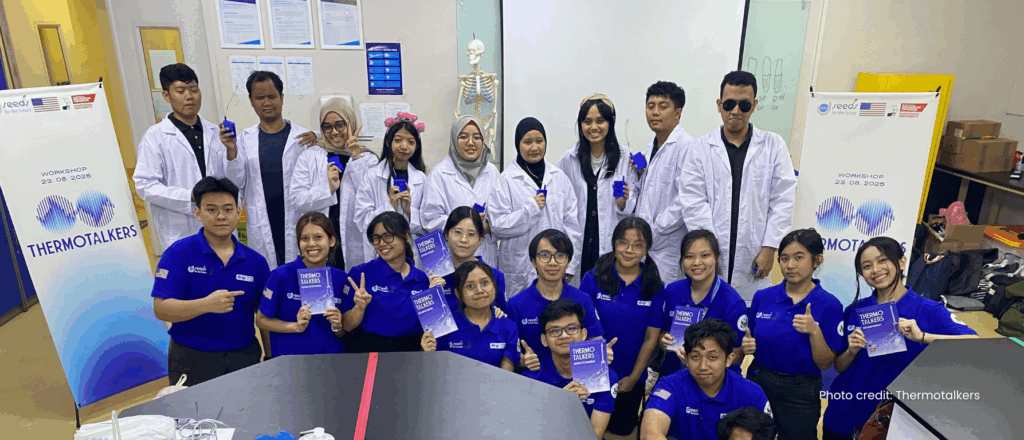
We produced more than 70 text-to-speech thermometers for workshop use and school distribution. Our team prepared five pilot workshops in Jakarta and Johor Bahru to involve up to 35 blind and visually impaired students in hands-on STEM sessions. We mobilized over 25 volunteers to support device preparation and accessibility facilitation.
We also conducted five school surveys to track needs, refine our activities, and update the device’s temperature-reading intervals and safety features. Outreach has started with organizations such as Mitra Netra and Pertuni to prepare for broader adoption.
What are the most significant lessons learned you’ve experienced so far?
Prototype testing showed that audio clarity and reading intervals must be adjusted depending on the experiment type, prompting us to refine the device’s timing features. We learned that teachers benefit from structured guidance on integrating the tool into physics and chemistry lessons. Coordinating with schools also highlighted the need for simple distribution procedures and clear maintenance instructions to ensure optimal device use.
What are the success stories you can share with others?
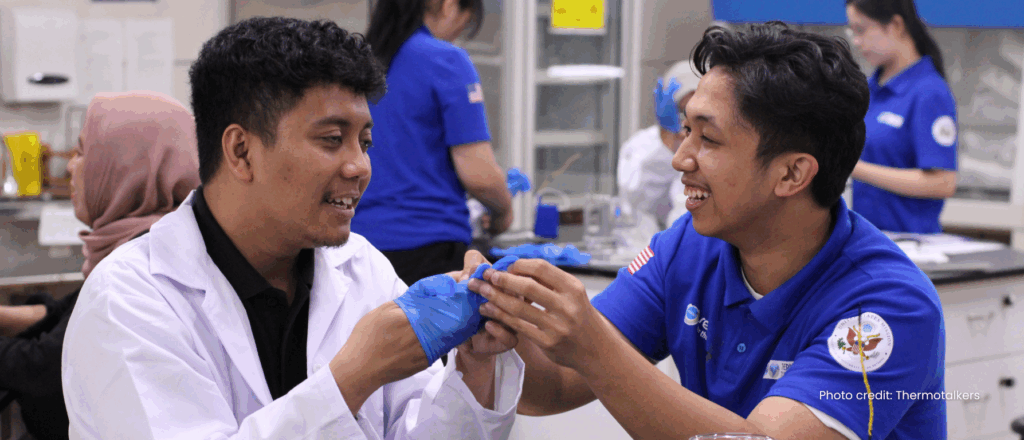
During one of our pilot workshop preparations, teachers shared that their visually impaired students often avoided experiments involving heat because they could not safely monitor temperature changes. After testing the ThermoTalkers device, she reported that students were able to follow the procedure independently and participate in the activity with greater confidence. This feedback affirmed the practical value of introducing an audio-based workflow to laboratory sessions.